The Women Who Disappear Without a Headline
In 2016, the National Crime Information Center received 5,712 reports of missing American Indian and Alaska Native women and girls. The federal missing persons database logged 116 of them.
Read that again. Out of 5,712 reports, the system recorded 116.
That isn't a gap in data collection. That is a statement about whose disappearance matters.
The Numbers That Exist
The statistics we have are staggering enough. American Indian and Alaska Native women are murdered at a rate ten times the national average on some reservations. More than four in five — 84.3 percent — have experienced violence in their lifetime. More than half have experienced sexual violence. Homicide is the third leading cause of death for Native women and girls between the ages of ten and twenty-four.
The Bureau of Indian Affairs estimates approximately 4,200 missing and murdered cases remain unsolved. These are the cases that made it into the system at all.
The Numbers That Don't
Here is the part most people never hear: we don't actually know how many Indigenous women are missing or murdered in the United States. There is no comprehensive national database. Cases are routinely misclassified — Native women recorded as Hispanic, Asian, or "other" on missing-person reports. Forensic evidence goes uncollected. Cases go cold within days. Crucial evidence is lost or never forwarded from local law enforcement to federal agencies.
The Urban Indian Health Institute studied 71 cities and identified 506 cases of missing and murdered Indigenous women and girls. Of those, 153 cases didn't appear in any law enforcement records at all. They were found through media reports, social media, advocacy organizations, and contact with families.
The families found them. Not the system.
Why This Happens
The MMIW crisis doesn't exist in a vacuum. It lives at the intersection of jurisdictional chaos, systemic racism, and centuries of colonial policy that stripped Indigenous communities of sovereignty, resources, and the ability to protect their own.
On tribal lands, criminal jurisdiction is fractured between tribal, state, and federal authorities in ways that create gaps a predator can drive through. A crime committed on a reservation might fall under tribal jurisdiction, federal jurisdiction, or state jurisdiction depending on the race of the perpetrator, the race of the victim, and the specific crime committed. In some cases, no agency claims responsibility. The case sits in the gap and the woman stays missing.
This jurisdictional patchwork isn't an accident. It is the legacy of policies designed to diminish tribal authority. And it has created an environment where violence against Indigenous women carries a lower risk of consequence than almost anywhere else in the country.
Add to this the impact of extractive industries. Research has identified correlations between fracking operations and increased rates of missing and murdered Indigenous women in as many as sixteen identified hotspot areas. The influx of transient male workers into communities near tribal lands — often called "man camps" — has been linked to spikes in trafficking, sexual assault, and disappearances.
What Silence Looks Like
When a white woman goes missing, the nation gets an Amber Alert, cable news coverage, and a search party. When an Indigenous woman goes missing, her family often conducts the search themselves. They make the flyers. They call the media, and the media doesn't call back. They file the reports, and the reports sit in a system that was never built to find their daughters.
This disparity has a name in media studies: Missing White Woman Syndrome. It describes the disproportionate coverage given to missing white women compared to missing women of color. But for Indigenous women, it goes beyond media coverage. It is embedded in the investigative response itself — in the resources allocated, the urgency applied, and the fundamental question of whether anyone with authority treats the disappearance as a crisis or a statistic.
What's Being Done
There has been progress. Savanna's Act, signed into law in 2020 in response to the murder of Savanna LaFontaine-Greywind, a 22-year-old enrolled member of the Spirit Lake Nation who was killed while eight months pregnant, aims to improve federal response to missing and murdered Indigenous cases. The Not Invisible Act established a commission to study the crisis. The Bureau of Indian Affairs launched a Missing and Murdered Unit.
May 5th is the National Day of Awareness for Missing and Murdered Indigenous Women and Relatives, honoring Hanna Harris, a 21-year-old Northern Cheyenne woman who was murdered in 2013. Due to an inadequate law enforcement response, Hanna's family and friends were forced to conduct their own search.
These are steps. They are not solutions. Legislation without funding is a press release. Awareness without accountability is a hashtag. The families leading this movement — organizing marches, maintaining databases, pressuring officials, grieving publicly because private grief changed nothing — they are doing the work that institutions have failed to do.
Why I'm Writing About This
I spent over a decade as a subject matter expert in family safety. I've worked with survivors of sexual assault, domestic violence, and human trafficking. I've seen what happens when systems designed to protect people instead protect the silence around them.
The MMIW crisis is not a distant tragedy. It is an ongoing, systemic, and deliberately under-documented failure. The women who disappear are mothers, daughters, sisters, grandmothers. They have names. They have families who refuse to stop searching.
The least the rest of us can do is refuse to stop paying attention.
If you want to learn more or support the movement:
- National Indigenous Women's Resource Center: niwrc.org
- National Missing and Unidentified Persons System: namus.gov
- Sovereign Bodies Institute: sovereign-bodies.org
- May 5 — National Day of Awareness for MMIWG
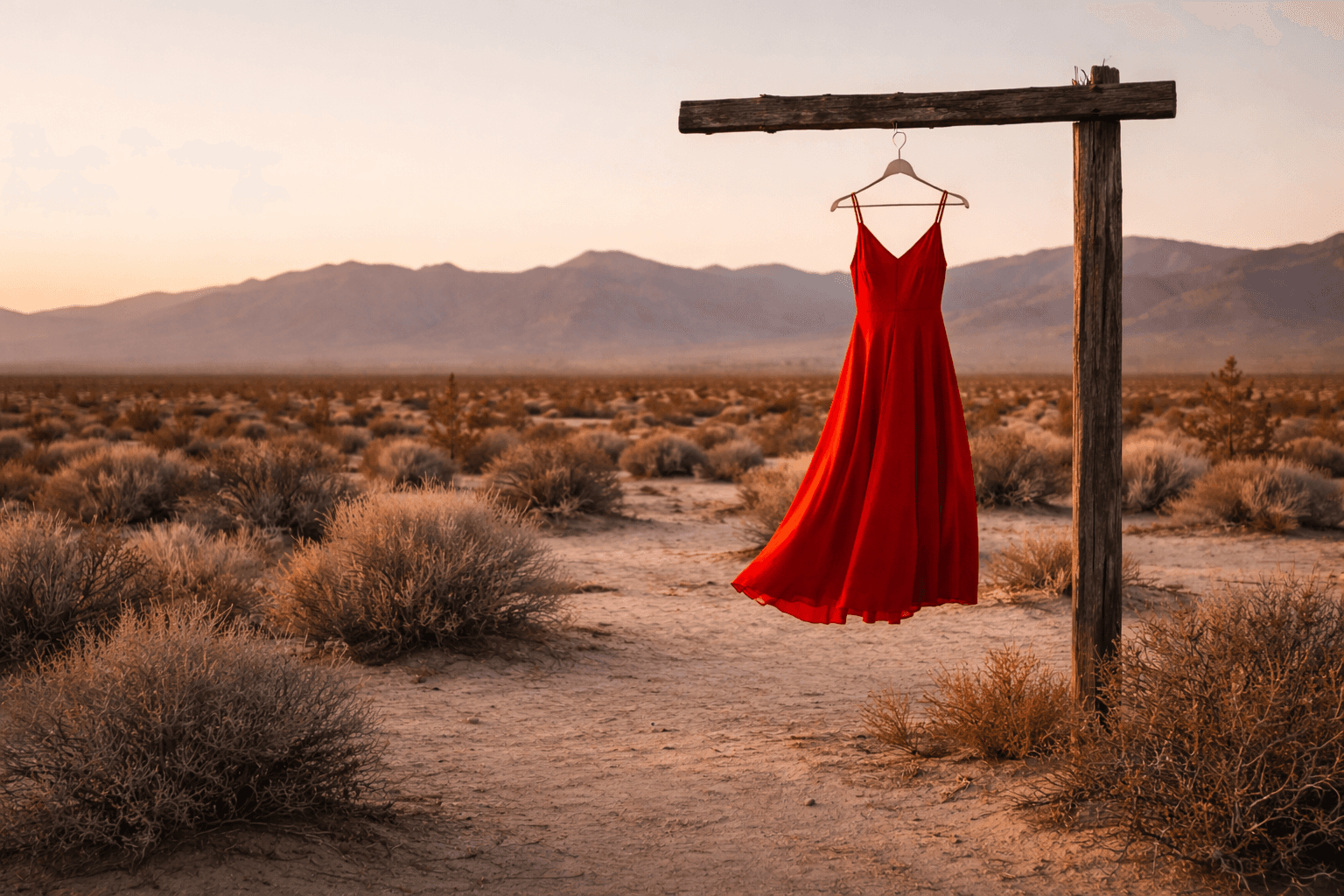
- Wear red. Say their names. Don't let them disappear.
Image created to honor the REDress Project, originated by Métis artist Jaime Black in 2010.