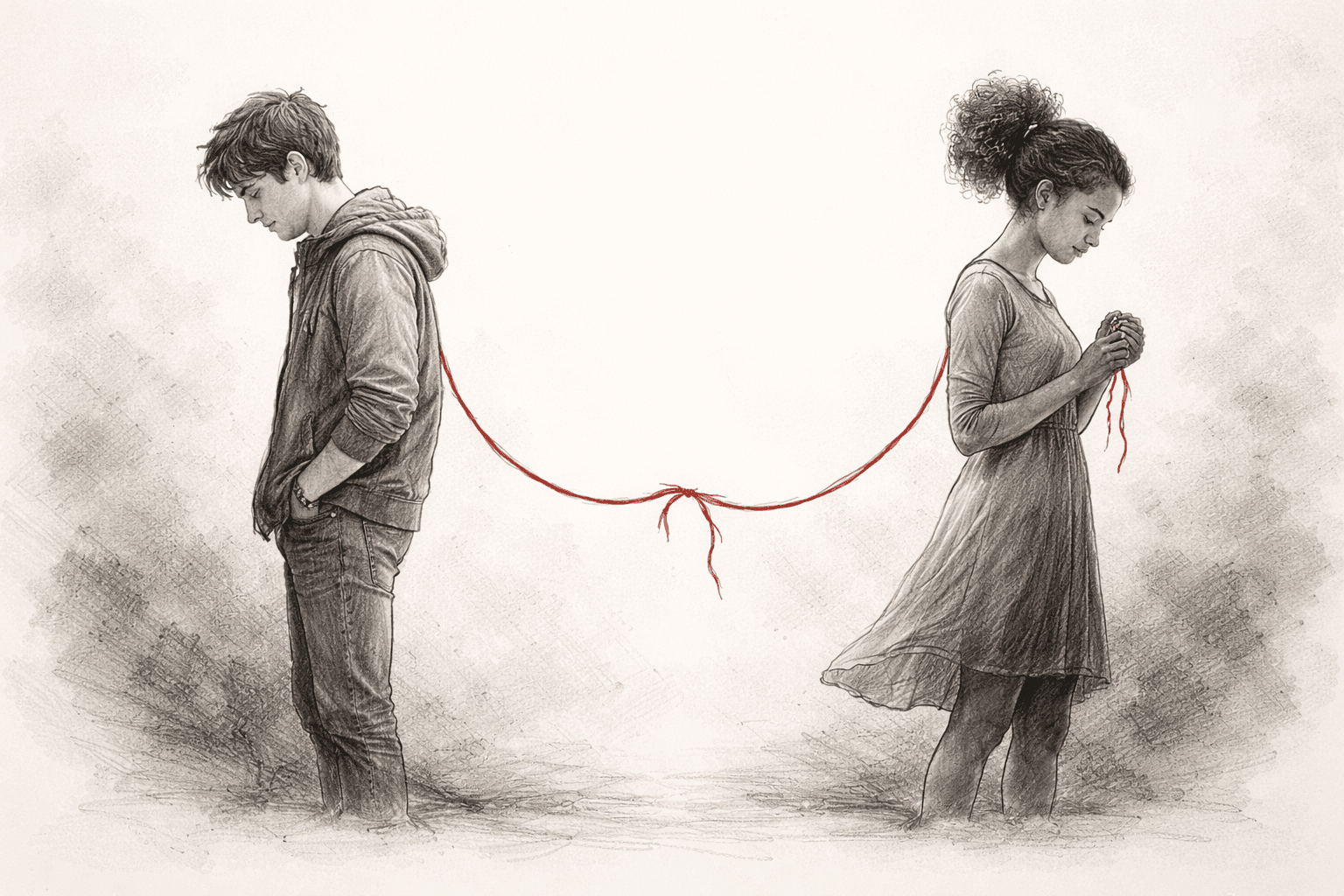
It Starts Before Anyone Goes Missing
February is Teen Dating Violence Awareness Month. Most people don't know that. Most people don't think about teen dating violence at all — until it's their daughter, their student, their neighbor's kid showing up with bruises she explains away or a boyfriend who checks her phone every fifteen minutes.
I spent over a decade as a subject matter expert in family safety, and I can tell you: the patterns that lead to missing and murdered women almost always start here. In the first relationship. In the first silence. In the first time someone teaches a girl that love is supposed to feel like surveillance.
The Numbers Nobody Talks About
Nearly 1 in 3 teens in the U.S. will experience physical, sexual, or emotional abuse from a dating partner before they reach adulthood. Among girls, that number is higher. Among Indigenous girls, it is significantly higher — and significantly less likely to be reported, investigated, or taken seriously.
Teen dating violence doesn't look like what most adults imagine. It's not always a black eye. It's a partner who demands passwords. Who isolates her from friends. Who tells her nobody else will ever want her. Who monitors where she goes, who she talks to, what she wears. It's control disguised as devotion, and to a teenager experiencing romantic attention for the first time, it can feel indistinguishable from love.
By the time it escalates to physical violence — and it almost always escalates — she's already been conditioned to minimize, excuse, and hide.
The Pipeline Nobody Names
Here is what I learned from years of working with survivors: there is a direct pipeline from teen dating violence to domestic violence to trafficking to disappearance.
It doesn't happen overnight. It happens in stages. A girl learns in her first relationship that her boundaries don't matter. She learns that jealousy means love. She learns to shrink herself to keep someone else calm. She carries those lessons into the next relationship, and the next, and each one narrows the corridor of what she believes she deserves.
For Indigenous girls, this pipeline operates inside systems that are already failing them — underfunded schools, fractured jurisdictions, communities where reporting violence means trusting institutions with a long history of doing more harm than good. The barriers aren't just personal. They're structural.
When we talk about Missing and Murdered Indigenous Women, we are often talking about the end of a story that started in adolescence. The crisis doesn't begin with a disappearance. It begins with the first time a girl's pain is ignored.
What I Saw
I've sat with teenagers who didn't have the language for what was happening to them. Girls who described being choked and called it "he just gets intense sometimes." Girls whose parents had no idea because the abuse happened entirely through a phone screen — threats, coercion, image-based abuse, constant monitoring disguised as texting.
I've also sat with the boys who did it. Teenage boys who learned violence at home and carried it into their first relationships like inherited luggage. Boys who genuinely didn't understand that what they were doing was abuse, because no one had ever named it for them.
That's the part that keeps me up at night. Not just the harm — but how early the patterns set in, and how preventable they are if someone intervenes before the concrete hardens.
What Actually Helps
Awareness months are fine. But awareness without action is a calendar event. What actually reduces teen dating violence is painfully simple and chronically underfunded:
Education in schools — not a one-time assembly, but integrated curriculum about healthy relationships, consent, and recognizing manipulation. Programs like these exist. They work. They are the first thing cut when budgets tighten.
Trusted adults who ask the right questions — not "is your boyfriend hitting you?" but "does your relationship feel safe?" The difference in language matters more than most people realize.
Accessible resources that don't require a teenager to walk into a police station or call a hotline in front of the person hurting them. Text-based helplines, school counselors trained in dating violence, community advocates who look like the girls they serve.
And the hardest one: believing them the first time they say something is wrong. Not minimizing. Not telling them it's just drama. Not waiting until there's visible damage to take it seriously.
Why This Matters Beyond February
Teen dating violence is not a standalone issue. It is the opening chapter of every crisis I've ever worked on — domestic violence, sexual assault, trafficking, and the disappearance of women the system never prioritized in the first place.
If you want to end the MMIW crisis, you have to go upstream. Way upstream. To the first relationship. To the first silence. To the moment someone could have said: this is not what love looks like.
That's where intervention changes everything. That's where one conversation can redirect a life.
February is the shortest month of the year. The awareness month will end. The pattern won't.
Pay attention to the girls around you. Ask the question. Believe the answer.
Resources:
- National Teen Dating Abuse Helpline: text "LOVEIS" to 22522 or call 1-866-331-9474
- National Domestic Violence Hotline: 1-800-799-7233
- StrongHearts Native Helpline (for Native Americans): 1-844-762-8483
- LoveIsRespect.org — resources specifically for teens and young adults